
FranU DPT Students Use 3D Printing to Create Mobility Devices for Children
March 25, 2026
Inside the Research and Innovation lab, Doctor of Physical Therapy students are combining technology and service to make a difference in the lives of children with mobility challenges.
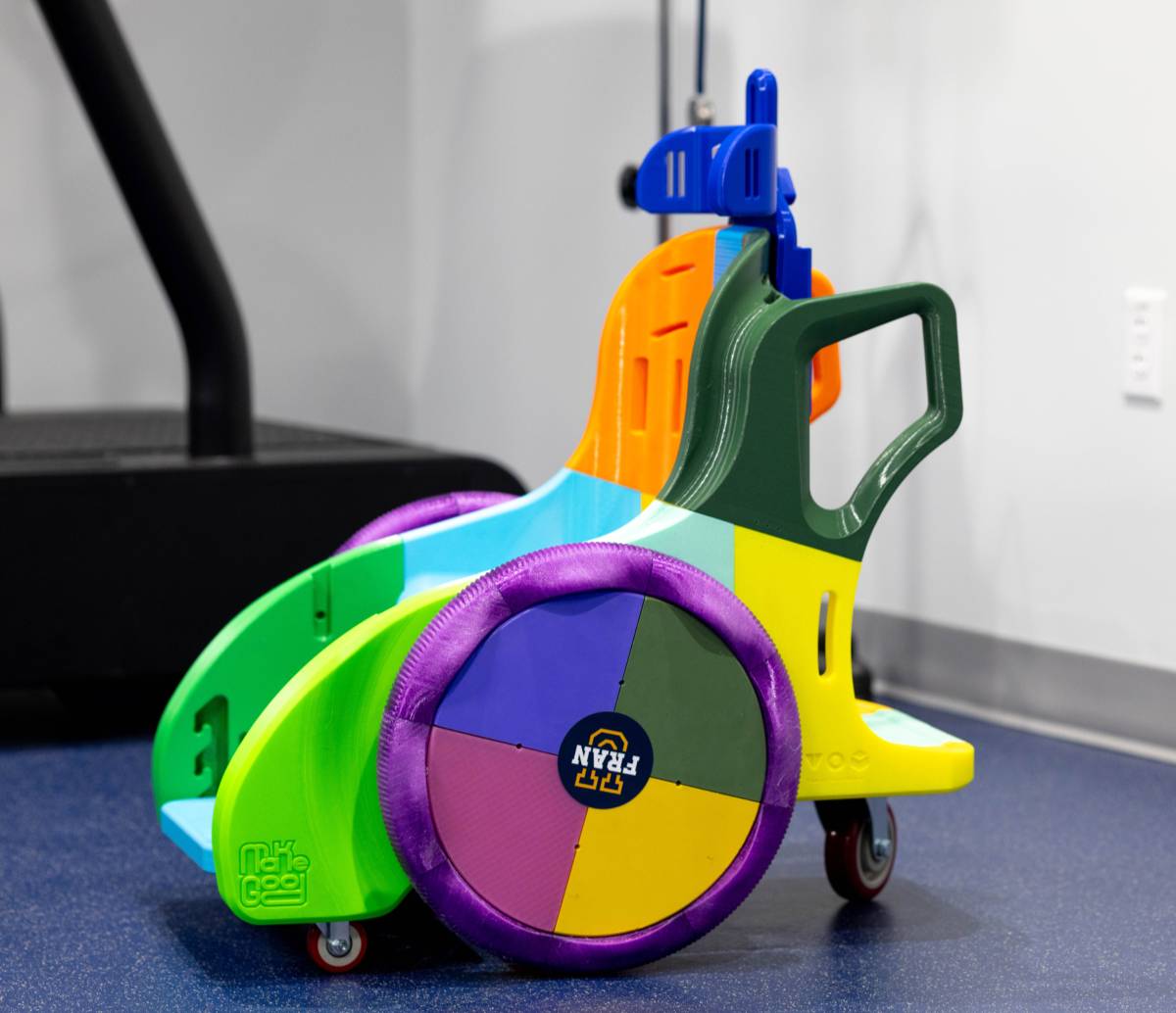
Under the guidance of DPT faculty, including Research Director Dr. Phil Page, Assistant Professor Dr. Megan Gautreau and Director of Clinical Education Dr. Mari Kantrow, students are using 3D printing technology to create mobility trainer parts and adaptive devices to help children move and interact with the world more independently.
This initiative is part of the Adaptive Device Lab project, led by DPT faculty and students, which focuses on printing devices to assist a person’s grip for daily activities such as reading, writing and brushing their teeth.
I thought it would be a great service-learning opportunity for students to not only provide these devices, but to learn 3D printing as well,” said Dr. Page. “I think physical therapists will be using more 3D printing in the future, so I'd like to offer our FranU students the opportunity to be ahead of the curve.”
This project is in partnership with MakeGood, a non-profit organization in New Orleans that creates and distributes assistive and mobility devices for children at no cost to families.
Our idea is to work with local clinics and hospitals to provide these devices for free through physical therapists in the community,” explained Dr. Page. “We work with MakeGood as an official 'maker' that links persons requesting mobility trainers for children in the region with us through their website.”
A Student-Led Service Project
The DPT class of 2027 is all hands-on deck for this initiative, playing a central role in every phase of the project. They helped launch this project by contributing philanthropic funds to purchase the lab’s first large volume printer. Since then, students have volunteered their time outside of class to operate the printers, assemble the devices and manage incoming orders.
Dr. Page trains them on how to print objects and maintain the printer and its supplies, forming their students into ‘certified’ makers. One 2nd year DPT student in particular, Brice Arceneaux, picked up the technology quickly and now mentors fellow students in the printing process. Arceneaux hopes to pursue a career in pediatric physical therapy, making the project especially meaningful to him.
Creating a single mobility trainer requires multiple printed components and nearly 200 hours of print time. With multiple printers running simultaneously in the lab, students can produce parts more quickly while continuing their training.
For faculty members, the project represents a new and exciting way to guide students through hands-on innovation.
“Managing the students and the print schedule will feel more like guiding a team versus supervising a traditional classroom,” said Dr. Gautreau. “The students are genuinely excited about this project. They’ve taken to the integration of technology incredibly quickly.”
The Future of Physical Therapy
Beyond creating mobility devices, the class is also using its 3D printers to develop educational models such as hearts and spinal vertebrae that support simulation-based learning.
Dr. Page also plans to incorporate research into the Adaptive Device Lab by studying how assistive devices influence movement patterns using the lab’s biomechanical analysis equipment. Future studies may explore the neurocognitive effects of using adaptive devices as well.
The lab continues to grow, with plans to add two additional printers and a scanning system that will allow students to create fully customized devices for patients.
What’s most exciting about integrating 3D printing into our lab is that we truly don’t yet know the full extent of where it can take us,” said Dr. Gautreau. “In the rehabilitation world, 3D printing is still a relatively new frontier. That means we’re stepping into a space where innovation isn’t just possible — it’s expected.”
Supporting the Mission
DPT students will be raising funds to cover the costs of materials and hardware. Each mobility trainer costs approximately $250 to produce.
The students will have their first fundraising event, Play for a Purpose, March 28 at Beach House Volleyball in Denham Springs.
Through innovation and hands-on learning, FranU students are turning technology into a powerful tool for service one printed layer at a time.
Learn more about FranU’s Health Professions Research and Innovation Lab here.
Share